.webp)
Safeguarding and Welfare
Policy & Procedure
Little Fish Norwich (“LFN”)
Accountable Director:
[Tristan Coull / Safeguarding Lead]
Date approved:
[September 2026]
Review Date:
[August 2027]
.png)
1.1
Ensure appropriate action is taken in the event of any incident or concern of abuse, and ensure support is provided to the individual(s) who raise or disclose the concern. Confidential, detailed and accurate records of all safeguarding concerns will be maintained and stored securely, in full compliance with UK GDPR, the Data Protection Act 2018 and WavePower requirements.
2.1
Our swimming club acknowledges the duty of care to safeguard and promote the welfare of children and vulnerable adults and is committed to ensuring safeguarding practice reflects statutory responsibilities, government guidance and complies with Swim England policy and procedure (WavePower 2024- 2027).
2.2
The policy recognises that the welfare and interests of children, young people and vulnerable adults are paramount in all circumstances. It aims to ensure that regardless of age, ability or disability, gender reassignment, race, religion or belief, sex or sexual orientation, socio-economic background, all children:
i. have a positive and enjoyable experience of sport at (“LFN”) in a safe
and child centred environment.
ii. are protected from abuse whilst participating in any activity undertaken
by (“LFN”) or the competing with The Piranhas.
2.3
We acknowledge that some children, including disabled children or those from ethnic minority communities, can be particularly vulnerable to abuse and we accept the responsibility to take reasonable and appropriate steps to ensure their welfare.
3.1
As part of our safeguarding policy, we will:
i. Ensure robust safeguarding arrangements and procedures are in operation.
ii. Adopt safeguarding best practice through our policies, procedures and code of conduct for staff and volunteers.
iii. Ensure everyone understands their roles and responsibilities in respect of safeguarding and is provided with appropriate learning opportunities to recognise, identify and respond to signs of abuse, neglect and other safeguarding concerns relating to children and young people.
iv. Provide effective management for staff and volunteers through supervision, support, training and quality assurance measures so that all staff and volunteers know about our policies, procedures and behaviour codes and follow them confidently and competently.
v. Ensure appropriate action is taken in the event of incidents or concerns of abuse and support provided to the individual(s) who raise or disclose the concern ensure that confidential, detailed and accurate records of all safeguarding concerns are maintained and securely stored record and store information securely, in line with data protection legislation and guidance
vi. Ensure we follow Safer recruitment policy as detailed within Wavepower. Prevent the employment or deployment of unsuitable
individuals by recruiting and selecting staff and volunteers safely, ensuring all necessary checks are made such as conducting DBS checks, a detailed written application and checking at least two references.
vii. Appoint a nominated safeguarding lead who is properly vetted and trained to safeguard, vulnerable adults, children and young people. The nominated and independent Safeguarding lead and welfare officer for (“LFN”) is Tristan Coull.
viii. Make sure that children, young people and their parents know where to go for help if they have a concern.
3.2
All personnel representing (“LFN”) are committed to the following.
i. Providing a safe learning environment for children, young people, and vulnerable persons.
ii. Instructors wishing to promote LFN activities will ensure their pre- requisite qualifications are always maintained and kept up to date; failure to do so will result in LFN being unable to support the instructor in the event of an allegation or opening of a case file.
iii. Reporting any suspicion(s) and allegation(s) of poor practice or abuse to the welfare officer [Tristan Coull] who will take positive and appropriate action in line policy and procedure and ‘WavePower’.
iv. Taking care to respond to suspicions and allegations, whilst doing so in an appropriate and swift manner to deal with the case in accordance with safeguarding procedures.
v. Maintain a safe and appropriate distance between instructor and participant, Physical contact or manual handling must be appropriate, necessary and clearly explained. Parental/guardian consent must be obtained for any planned manual handling, and the child’s comfort and understanding must be checked.
vi. Any child aged 8 or above should change in the changing room that aligns with their gender identity, unless they require additional support from a parent or guardian. Adults must not change with children unless essential for care needs. Supervision will take place outside changing rooms, in line with WavePower. LFN will complete an individual risk assessment for any child or young person requiring alternative arrangements due to disability, privacy needs or gender identity.
vii. LFN respect and adhere strictly to the Equality Act 2010. We acknowledge that some children / young persons may not identify as either male or female, or a young person may identify as the opposite sex from their birth. If a child or young person who has identified as the opposite gender to their birth sex and does not feel comfortable changing in their birth sex changing room, LFN will make reasonable adjustments to provide an alternative and separate changing area for that young person.
4.1
All staff representing LFN including; Teachers, Assistants and Volunteers have an important role with safeguarding children and young people. Each staff member will read the Safeguarding and Welfare Policy and Procedure and will know what to do and their responsibilities in the event of a disclosure or concern.
4.2
All LFN staff and volunteers must complete annual safeguarding training in line with WavePower requirements. The Welfare Officer will maintain a training register and ensure refresher training is completed every 12 months. Staff must also complete training in digital safety, data protection and reporting procedures.
5.1
No person has the legal right to assume or decide on an individual basis whether abuse has taken place. If any personnel have concerns, they must act on them responsibly with the appropriate necessary actions to protect both parties. In the event of receiving a possible allegation of abuse, the receiver must comply with the following;
I. Stay calm to ensure a non-threatening environment for both parties.
II. Reassure the individual informing them they are not to blame and did the right thing by speaking out.
III. Listen to the individual, showing respect and that they are being taken seriously.
IV. Minimise the questions asked to ensure the individual is disclosing the information on their own accord.
V. Staff must not investigate. All allegations will be referred to the Welfare Officer and, where required, to MASH, Police or Swim England for statutory investigation.
VI. Where possible take notes of what was reported in direct speech. If it is not possible to take notes at the time of the disclosure, ensure notes are made as soon as possible afterwards.
VII. Inform the individual that you will have to speak to your safeguarding officer about what they have told you to help them.
5.2
LFN will maintain a low-level concerns log in accordance with WavePower.
6.1
When recording a safeguarding issue, the following information should be recorded accurately.
i. Individual's name and date of birth.
ii. Individuals home address and telephone number.
iii. Is the individual expressing concern for themselves or another person.
iv. The nature of the concern.
v. Description of any visible injury.
vi. Details of any witness to the incidents.
vii. Has any family member been contacted; parent/guardian when dealing with a child.
viii. Has anyone else been consulted with the issue.
7.1
Little Fish Swim School Norwich LFN is committed to meeting all statutory requirements relating to data protection, cyber security, employment law and safeguarding practice. In accordance with the UK GDPR, the Data Protection Act 2018 and the Data Protection and Digital Information Bill (2025-2026), LFN will ensure that all safeguarding records, incident reports and personal information are stored securely, accessed only by authorised personnel, and retained in line with legally defined retention periods. LFN will maintain a clear procedure for responding to data-protection concerns or complaints, including investigation, documentation and escalation where required.
7.2
LFN will also comply with emerging obligations under the Cyber Security and Resilience Bill (2026), ensuring that digital systems used for safeguarding, communication or operational management are secure, monitored and protected against unauthorised access. Staff and volunteers must follow LFN’s digital-safety protocols when using electronic devices, including mobile phones, tablets or laptops, and must never store safeguarding information on personal devices.
7.3
In line with the Employment Rights Act 2025, LFN recognises that staff and volunteers who raise safeguarding concerns are protected under whistleblowing and harassment-related disclosure provisions. No individual will suffer detriment for reporting a safeguarding concern in good faith, and LFN will ensure confidentiality is maintained in accordance with statutory requirements and Swim England’s WavePower guidance.
7.4
LFN maintains a confidential whistleblowing procedure protecting staff who raise safeguarding concerns.
8.1
Reporting a safeguarding referral or suspicion is the responsibility of the designated safeguarding lead. A full assessment of the referral will be conducted, and an internal investigation commenced if necessary.
I. Safety of the individual is paramount. If the individual needs urgent medical care, call the appropriate services, inform those concerned and make them aware that it is a safeguarding issue.
II. Report the concern and information to the designated Welfare Officer immediately and without delay. Safeguarding concerns must be escalated as soon as they are received, and always within the same session.
8.2
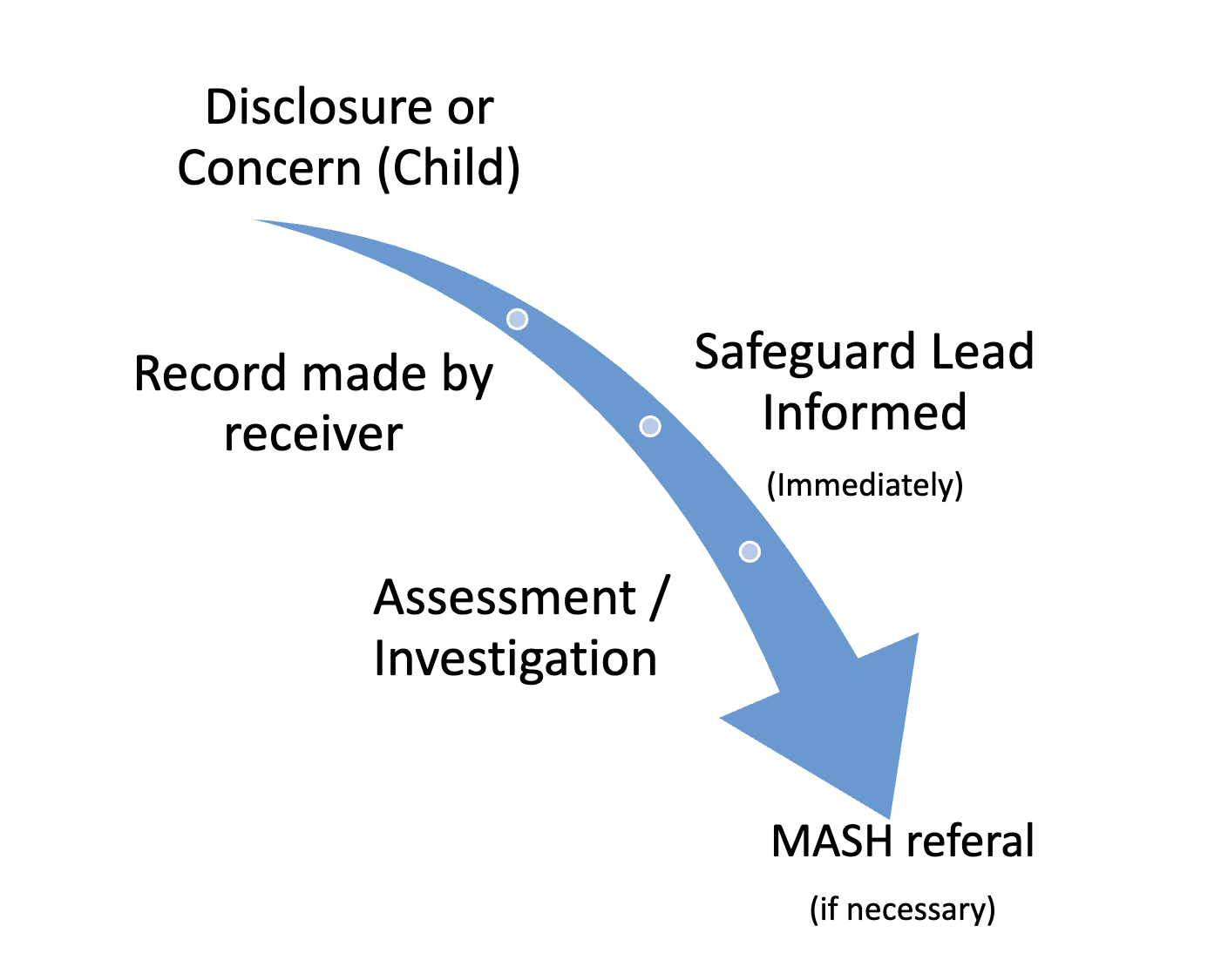
A pictogram showing a clear route from Disclosure to Referral.
8.3
If a serious crime is suspected, we will contact the police. If we believe there is a child at risk of serious or significant harm, neglect or abuse we will ensure a referral is made to the MASH (Multi-Agency Safeguarding Hub).
9.1
Adult safeguarding at LFN is governed by the Care Act 2014, the Mental Capacity Act 2005 and local authority adult safeguarding procedures. LFN follows the “Making Safeguarding Personal” principles, ensuring adults are involved in decisions wherever possible and supported to express their wishes and outcomes.
9.2
When LFN are made aware of concerns about an adult at risk, the Welfare Officer must share such concerns where any of the following consent conditions apply:
1. The adult at risk has consented to the information being shared;
2. The adult at risk is believed to lack the mental capacity to decide on the next steps themselves (if in doubt, please refer to the Safeguarding and Welfare Team at Swim England);
3. The adult at risk or someone else is at risk of harm;
or 4. where a concern has been reported to an external body (such as the Police in an emergency), this must be reported as soon as practically possible.
The following three stages of action must be taken for anyone who may have a concern or is made aware of a concern about an adult at risk wellbeing:
Stage 1 – React to the concern, disclosure, suspicion, or allegation in a timely and appropriate manner.
Stage 2 – Record the relevant information.
Stage 3 – Report the information to the appropriate person(s) and/or organisation(s), subject to the above consent conditions being met.
10.1
In line with Swim England’s clear position, LFN now stipulates that all use of mobile phone or device in a changing area is strictly prohibited. Any use of such devices must be documented and reported to the safeguarding lead if there is a concern that an image or video has potentially been captured. Any use of a mobile phone or device in a changing room area must be reported to the Welfare officer.
11.1
Teachers, Assistants and Volunteers for LFN will not contact children (unless a family member) through social media networking sites if they are a member of our swimming club. Staff must not accept friend requests from children or young people on personal social media accounts, our contact with children will be through the official club social media accounts and through the parent/guardian. Social networks will never be used as a medium by which to abuse or criticise members and to do so may be in breach of Swim England regulations.
11.2
Young coaches must not initiate new contact with members aged 16 and 17 years old.
11.3
LFN recognises that many young coaches and teachers aged 18 to 21 will have been Members themselves before becoming a coach or teacher, and will be friends with their fellow Members, some of whom will still be aged 16 or 17. It is therefore plausible that they will have the personal contact details for those Members, or be connected with them on social media sites. LFN accepts it would be inappropriate to require these specific young coaches or swimming teachers to remove the details of those Members from their contact lists or social media profiles. Therefore, if a coach or swimming teacher aged 18 to 21 has phone and/or email details for Members, or is connected to them on social media, who are aged 16 or 17 upon undertaking the role of coach or swimming teacher, LFN does not expect them to remove those Members from their contact list. The coach or teacher must however inform the Welfare Officer and the Head Coach [Toby Ketland] that they hold these contact details.
11.4
The publishing of a photograph or video footage on any social networking site will be carefully vetted before publication. If a child is identifiable, consent will be obtained from the parent or guardian before the photograph is published.
11.5
LFN will obtain explicit, informed and revocable consent from parents or guardians before publishing any identifiable images or video of children. Consent will specify the purpose, platform and duration of use. Images will not be stored on personal devices, and all media will be reviewed by the Welfare Officer prior to publication. No photography or filming is permitted in changing rooms under any circumstances.
12.1
Key Safeguarding Contacts
MASH (Norfolk): 0344 800 8020
LADO (Norfolk): 01603 223473
Police (non-emergency): 101
Emergency: 999
NSPCC Helpline: 0808 800 5000
Swim England Safeguarding Team: safeguarding@swimming.org
13.1
The following key terms are used in this document: